Scholarly Articles, Research Studies and White Papers
Helping Health Plan Sponsors Meet Their Payment Integrity Fiduciary Duties
Health plans constitute one of the largest unaudited operating expenses for many organizations … something that has not gone unnoticed by the many state financial officers who want companies to analyze their healthcare spend to protect shareholder value. Their concern is valid: even with the advancements made in plan administration technologies — and the advent of sophisticated pre-adjudication payment integrity solutions — claim payment errors are inevitable for reasons that are unavoidable. These errors are the result of both inadvertent and intentional provider mistakes, questionable payer business decisions, and unfair network-imposed limitations on pre-processing claim adjustments. What is worse, most of these claim payment errors cannot be identified or resolved prior to payment … thereby requiring a post-payment solution.
Provider payment errors come in two forms: over- and underpayments. Overpayments result in the misuse of plan assets and increase plan and participant costs. TPAs, plan sponsors and trustees all bear a fiduciary responsibility under ERISA to protect plan assets, which includes pursuing and recovering overpayments. Likewise, provider underpayments result in overcharging participants and there exists an equally important fiduciary obligation to ensure that healthcare providers are not undercompensated to the detriment of plan participants (a violation of the duty of loyalty). A breach of these duties subjects TPAs, plan sponsors and trustees to unnecessary risks and liabilities.
This report is intended to inform ERISA plan sponsors and their professional advisors as to why it is vital to address provider payment errors. It also offers advice re: choosing a vendor that specializes in post-payment error remediation services.
The Case for Pursuing Overpayment Recovery and Underpayment Remediation: A Guide for Plan Sponsors and Trustees of ERISA - Regulated Health & Welfare Plans ... may be downloaded by clicking on the image above. An abstract of the piece (sans the vendor survey) is available here.
Pre-Publication Preprint: March 2022
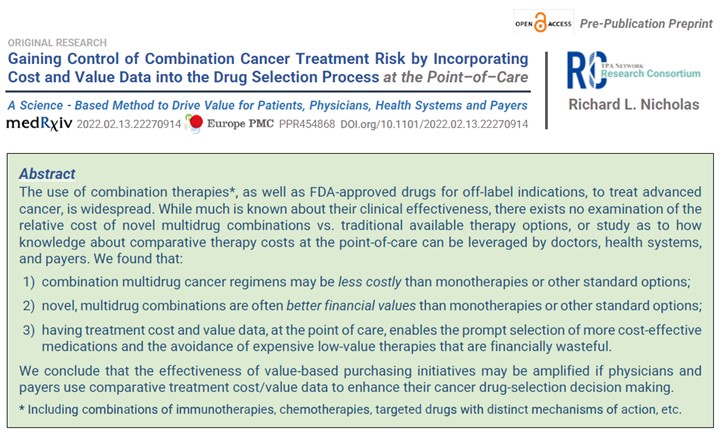
Recently conducted by the Research Consortium, this study challenges many common misconceptions about combination cancer treatments, their cost and value. For the first time, it provides payers, providers and patients alike with important insight as to how they can better select cancer medications (that are likely to be more effective) and avoid expensive, low-clinical-value medications that are wasteful.
This research has potentially serious implications as it relates to emerging new concept of "medical necessity" and the use of advanced AI-assisted technology for pre-authorizations and in the practice of medical care management / cost containment.
This study has been indexed and archived under the subject area Health Economics on MedRxiv and is available here. *
This document describes the HERO Voluntary Healthcare Research Benefit which enables Plan Participants to access leading-edge care and advance medical research.
This article details why the scientific research used to prove the efficacy of precision medicine provides no evidence re: cost-effectiveness, ROI, value, outcomes, etc.

This document describes our perspective on the changing healthcare environment and why a new research approach is required to satisfy more advanced payor needs.
This document provides a detailed overview of the healthcare industry from a layperson's perspective and how we intend to conduct translational research.
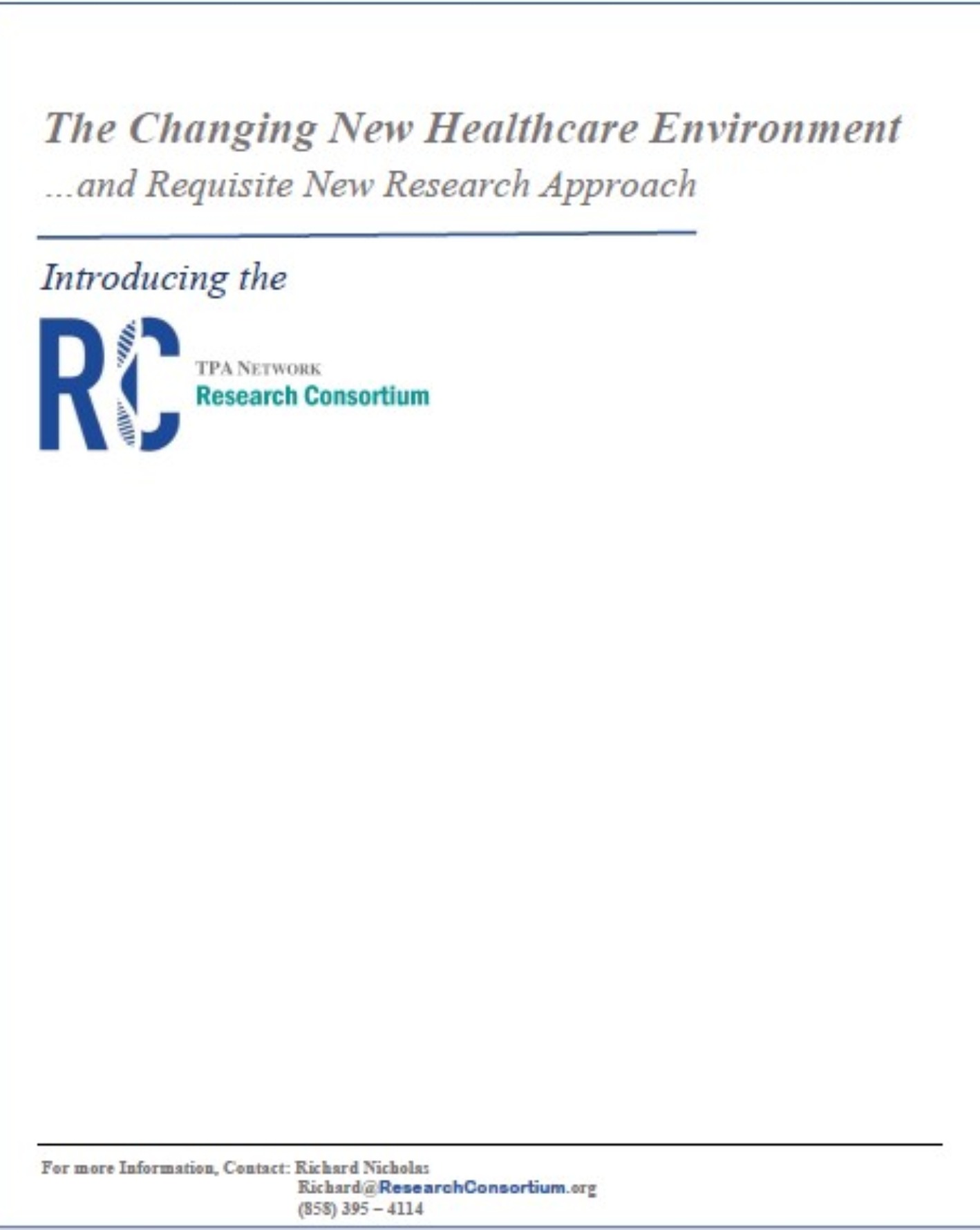

This document provides an overview of precision medicine, pharmacogenomics (PGx) and the value and use of genetics/genomics in medical treatment.
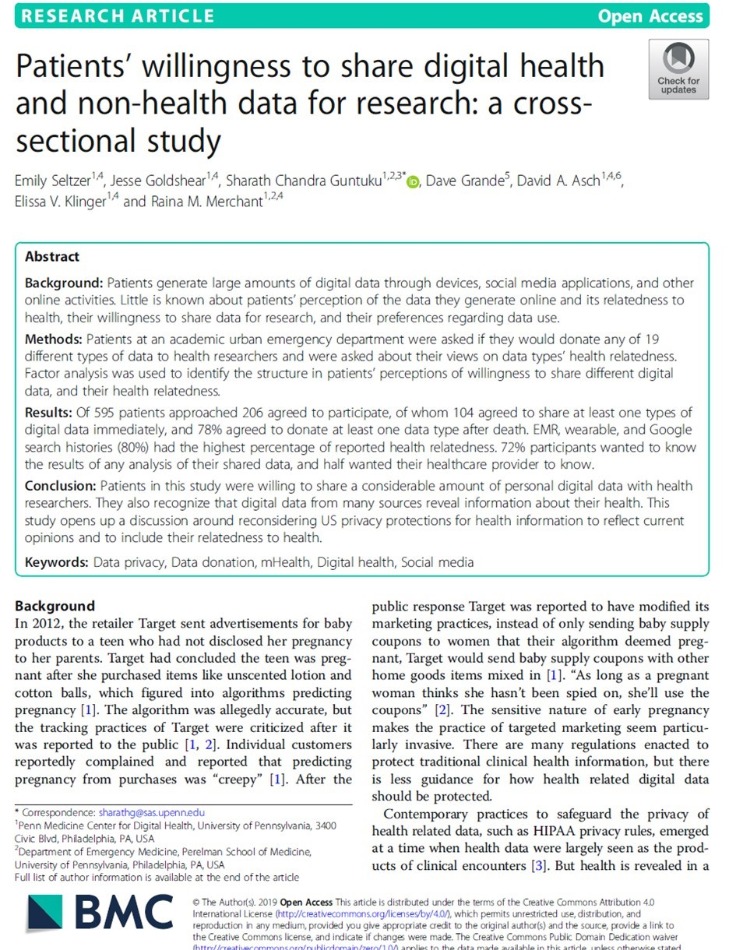
The report summarizes research conducted to determine why, when and to what extent patients will share their health data with researchers and their health plan.
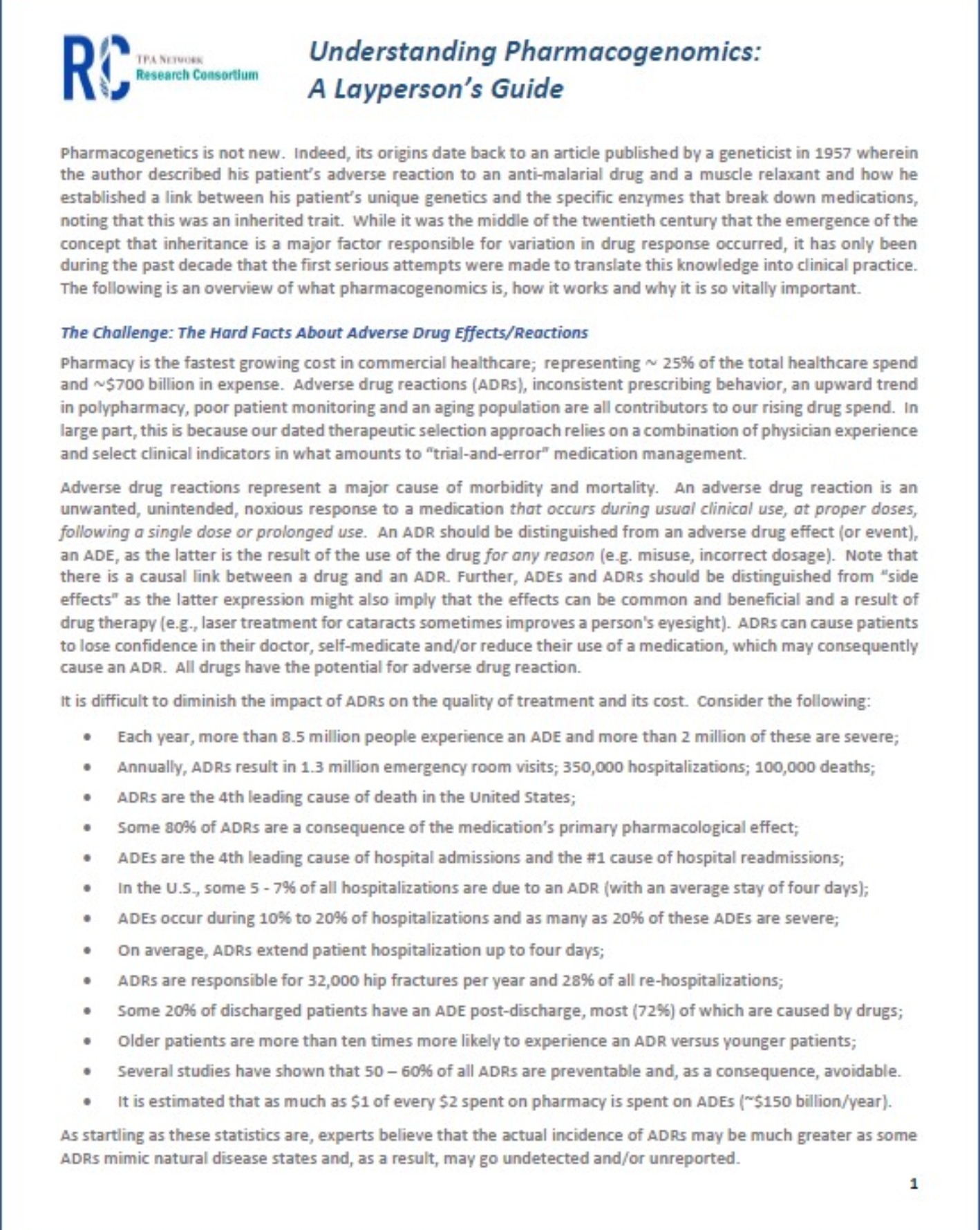
This article describes how researchers and payers are collaborating to design research studies that satisfy the needs of payers for evidence to warrant coverage.
This CBT Advisors white paper provides insight for investors re: translational research as a way to produce clinical, commercial and financial outcomes.

This SHYFT report is on Using Real-World Evidence to Optimize Clinical Trials(Improving Trial Design, Patient Recruitment, and Data Analysis)
This document describes our take on charging self-funded plans for a service that doesn't benefit them: broadening the PCORI Reauthorization Act of 2019.